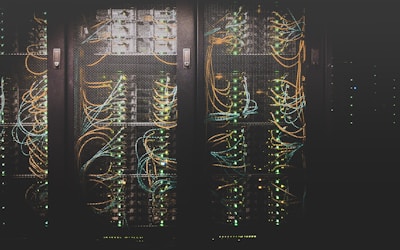
AI infrastructure and hardware dominate headlines, with massive investments addressing power and chip constraints. Satellite connectivity and quantum advances signal shifts in global tech scaling, while consumer AI integrations push boundaries in apps and devices.
AI's Infrastructure Boom: Powering the Future of Tech in 2026
Artificial intelligence is no longer just a buzzword — it’s reshaping the very foundations of modern technology. From data centers and chips to satellites and consumer devices, AI is forcing the industry to rethink how systems are built, powered, and scaled.
By early 2026, these shifts are becoming impossible to ignore. Massive investments are pouring into AI infrastructure, while new breakthroughs promise to push computing beyond traditional limits.
The AI Infrastructure Crunch: Chips, Power, and Billion-Dollar Bets
AI’s rapid expansion has exposed serious bottlenecks in hardware and energy. Data centers running large models now consume electricity at levels comparable to small countries, pushing power grids to their limits.
In response, tech giants are investing billions in custom silicon. AMD’s Ryzen AI 400 series brings powerful on-device AI processing to laptops, while Intel is pushing aggressively into edge-optimized chips. Reports of Microsoft slowing data-center expansion highlight just how serious power constraints have become.
Nvidia continues to dominate with advanced models like Nemotron 3, designed to handle million-token contexts for autonomous AI agents. These innovations aim to break through the so-called “power wall” limiting AI growth.
Satellite and Quantum: Scaling AI Beyond Earthly Limits
AI scaling is no longer confined to ground-based infrastructure. Satellite technology is becoming a critical layer, enabling global AI deployment even in remote regions.
Companies like CesiumAstro are accelerating low-Earth orbit connectivity, reducing latency for real-time AI inference. At the same time, speculation around orbital data centers suggests future AI workloads could move into space to bypass terrestrial power and cooling limits.
Quantum computing adds another dimension. Firms pushing error-corrected qubits are edging closer to systems capable of accelerating AI training far beyond classical hardware, opening doors to previously impossible computations.
Consumer AI: From Swipes to Smart Homes
AI’s impact is becoming personal. Everyday apps and devices are evolving from reactive tools into intelligent companions that anticipate user needs.
Dating platforms are testing AI to reduce swipe fatigue through deeper personalization. Entertainment giants are embedding generative AI into content creation and immersive experiences. Smartphone and laptop makers are racing to integrate AI accelerators directly into hardware.
Even home energy systems are changing. AI-driven batteries now predict usage patterns, stabilize grids, and turn households into active participants in energy markets.
Challenges and the Road Ahead
Despite the momentum, challenges remain. Rising energy demand strains infrastructure, ethical and regulatory scrutiny intensifies, and quantum computing still faces technical hurdles.
Yet, with investment accelerating and innovation compounding, 2026 is shaping up to be a defining year. The convergence of infrastructure, orbital scaling, and consumer AI isn’t a trend — it’s becoming the new technological baseline.
The future of AI is being built right now, layer by layer, across Earth, orbit, and beyond.