AI Hardware & Cloud Infrastructure: Why Power and Cooling Have Become the Biggest AI Bottlenecks in 2026
By Chika Eze
Editor-in-Chief & Senior Technology Journalist
In
Chika Eze Editorial Profile
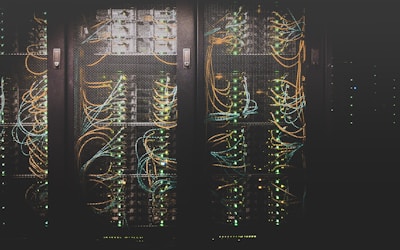
A major shift is happening inside the global artificial intelligence industry. While the public continues focusing on AI models and chatbots, infrastructure providers are confronting a more urgent reality behind the scenes: the biggest limitation facing modern AI is no longer raw computing power alone — it is electricity, cooling capacity, and physical infrastructure.
As hyperscale datacenters continue expanding worldwide, power demand from AI systems is increasing at historic levels, forcing technology companies to rethink how the future of artificial intelligence can remain sustainable.
The AI Infrastructure Explosion
The rapid rise of advanced AI systems has dramatically increased demand for:
- High-performance GPUs
- Massive cloud infrastructure
- AI training clusters
- Datacenter expansion
- High-density networking systems
Modern AI models now require enormous computational resources during both training and real-time deployment phases.
This growth has pushed cloud providers and infrastructure companies into an aggressive global expansion cycle.
Why Electricity Is Becoming the Biggest AI Problem
Industry analysts increasingly warn that electrical power availability may become the single largest limiting factor for enterprise AI expansion.
Large AI datacenters consume extraordinary levels of energy due to:
- Continuous GPU processing
- 24/7 inference workloads
- Massive storage operations
- Advanced networking equipment
- Cooling systems required for heat management
The Cooling Crisis Inside Modern Datacenters
As AI chips become more powerful, heat generation inside datacenters has become increasingly difficult to manage.
Traditional air-cooling systems are struggling to keep pace with:
- Dense GPU server racks
- Higher thermal output
- Continuous AI workloads
- Large-scale cloud operations
This is accelerating investment into next-generation cooling technologies including:
- Liquid cooling systems
- Immersion cooling
- Advanced thermal management
- Energy-efficient datacenter designs
Why Hyperscale Companies Are Racing for Infrastructure Dominance
| Company | Main AI Infrastructure Focus |
|---|---|
| Nvidia | AI GPU dominance |
| Microsoft | Cloud AI expansion |
| Amazon AWS | Hyperscale datacenters |
| AI cloud optimization | |
| Meta | AI compute infrastructure |
| Oracle | Enterprise AI cloud growth |
Infrastructure capacity is rapidly becoming one of the most valuable strategic assets in the AI economy.
Power Grids Are Under Increasing Pressure
Governments and energy providers are now facing growing pressure from the AI boom.
Concerns include:
- Electricity demand spikes
- Grid reliability
- Energy sustainability
- Environmental impact
- Renewable energy integration
Some regions are already reassessing how future AI datacenters can be supported without overwhelming local infrastructure.
The Shift Toward Energy-Efficient AI
To address growing infrastructure pressure, companies are increasingly investing in:
- Energy-efficient AI chips
- Smaller optimized models
- Edge AI processing
- Custom silicon development
- Low-power inference systems
The goal is to reduce energy consumption while maintaining strong AI performance.
Why This Matters for Businesses and Investors
The infrastructure bottleneck may significantly influence:
- AI startup costs
- Cloud service pricing
- Semiconductor demand
- Energy investment markets
- Future AI scalability
Companies capable of solving infrastructure efficiency challenges may become some of the biggest winners of the next AI era.
Referenced Companies and Platforms
Nvidia
Microsoft
Amazon AWS
Google Cloud
Meta
Oracle
Author Profile
Final Thoughts
The AI industry is entering a new phase where physical infrastructure matters as much as software innovation. Datacenter electricity demand, cooling efficiency, and energy sustainability are quickly becoming defining challenges for the future of artificial intelligence.
While public attention often focuses on new AI models and consumer tools, the real battle may increasingly happen behind the scenes — inside power grids, semiconductor factories, and hyperscale datacenters.